Art and music therapy are not merely recreational activities in treatment centers — they are scientifically validated therapeutic approaches supported by research demonstrating their effectiveness in supporting addiction recovery. Art and music therapy open a door to expression and healing that remains closed for many who find it difficult to speak directly about their feelings, traumas, and painful experiences.
According to the American Art Therapy Association, art and music therapy help reduce anxiety, depression, and post-traumatic stress symptoms while improving quality of life for people at different stages of recovery. Therefore, art and music therapy have become integral components of addiction treatment programs in specialized centers worldwide.
What Are Art and Music Therapy?
Art and music therapy involve the use of creative expression as a structured therapeutic medium under the supervision of a specialist trained to harness the creative process in support of mental health and addiction recovery.
Art and music therapy require no prior artistic talent or experience. Therefore, what matters is not the quality of the creative work but the process itself — what it evokes, what it allows to surface and be expressed. Furthermore, the complete beginner and the experienced artist benefit equally because the goal is therapeutic, not aesthetic.
Why Do Art and Music Therapy Work Specifically With People in Addiction Recovery?
- Many people with addiction have difficulty verbally expressing their feelings and traumas
- Creativity allows expression of what words cannot adequately describe
- Furthermore, the creative process releases dopamine naturally and healthily, helping the brain rebuild its reward circuits
- Therefore, art and music provide a safe outlet for intense emotions that could be dangerous if they find no other channel
Art Therapy in Addiction Recovery
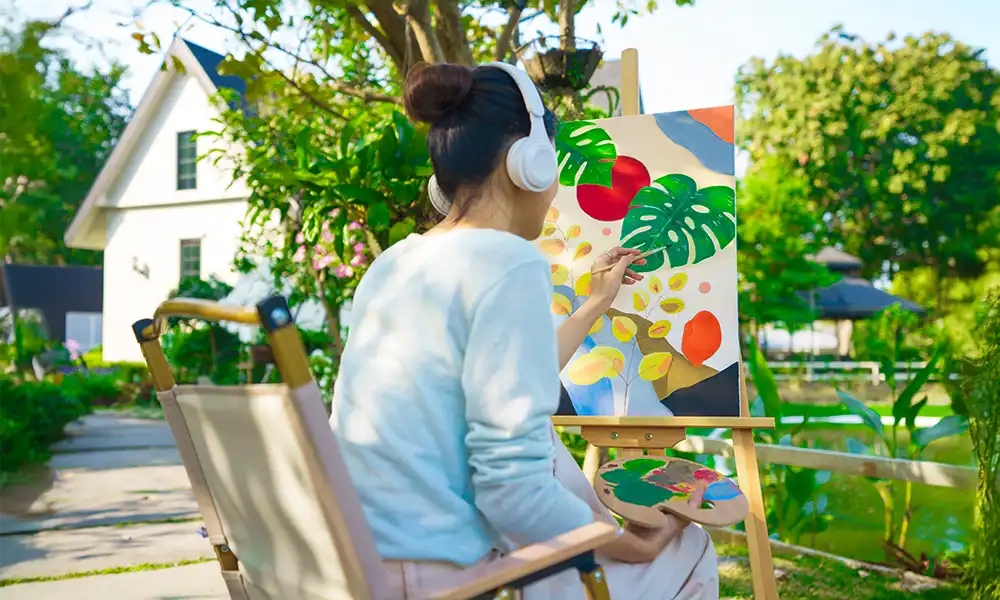
Art therapy in addiction recovery involves using visual arts — drawing, painting, sculpture, and collage — to explore feelings, process trauma, and develop self-awareness in a safe therapeutic environment.
How Does Art Therapy Work?
In an art therapy session, the specialist works with the patient on:
- Exploring inner imagery: Drawing expresses unconscious content that is difficult to describe verbally
- Processing trauma indirectly: Artwork allows approaching trauma with greater safety
- Developing a new identity: Creating work that expresses “who I am without addiction” is a powerfully therapeutic exercise
- Furthermore, building self-confidence through producing something tangible and meaningful
Approaches Used in Art Therapy
- Drawing and painting: For spontaneous expression of feelings and inner states
- Sculpture and clay: Provides a physically grounding and focusing sensory experience
- Collage: Helps build a visual, tangible picture of the new self
- Therefore, illustrated journals: Combine writing and drawing to visually document the recovery journey
Music Therapy in Addiction Recovery
Music therapy in addiction recovery involves the active or receptive use of music under the supervision of a specialized music therapist to achieve specific psychological, emotional, and physical therapeutic goals.
Forms of Music Therapy
- Active listening: Conscious listening to selected music to explore the feelings it evokes
- Playing and singing: Active expression through musical instruments or voice
- Songwriting: One of the most powerful tools in music therapy for expression and emotional processing
- Furthermore, group rhythm: Playing together develops skills in cooperation and belonging
How Does Music Affect the Brain During Recovery?
Music simultaneously stimulates multiple regions of the brain. Therefore, it releases dopamine, serotonin, and oxytocin — producing a natural sense of pleasure, calm, and human connection. Furthermore, regular rhythm helps regulate the nervous system and reduce anxiety.
The Benefits of Art and Music Therapy in Recovery
Art and music therapy produce a unique set of therapeutic benefits that complement traditional psychological therapy and achieve results that words alone cannot.
Psychological and Emotional Benefits
- Reducing anxiety and depression in a safe and enjoyable way
- Processing trauma indirectly and less painfully
- Building self-awareness and understanding inner feelings at a deeper level
- Therefore, developing a new identity distinct from the “addict” identity
Social Benefits
- Developing communication and expression skills through non-verbal channels
- Building trust and belonging in group sessions
- Furthermore, creating positive memories and good feelings associated with healthy activities
Physical Benefits
- The gentle movement associated with drawing and playing helps regulate breathing
- Reducing physical tension and muscle relaxation
- Furthermore, improving motor coordination affected by addiction
Art and Music Therapy at Relife
At Relife, we integrate art and music therapy as an authentic component of our comprehensive treatment programs. Therefore, our team includes expressive therapy specialists who work alongside psychological therapists to deliver a holistic treatment experience that addresses the whole person.
Frequently Asked Questions
Q: Do art and music therapy suit all people with addiction?
Art and music therapy suit a very wide range of people with addiction regardless of artistic background or age. Therefore, people who find verbal expression particularly difficult benefit especially. Furthermore, the approaches can be adapted to suit individuals with special needs or those at different stages of recovery.
Q: Can art and music therapy replace traditional psychological therapy?
Art and music therapy complement traditional psychological therapy rather than replace it. Therefore, the best outcomes are consistently achieved when both are integrated into a comprehensive treatment plan. Furthermore, some therapeutic stages benefit more from expressive therapy than direct verbal conversation, particularly in trauma processing.
Q: How do you know if you would benefit from art and music therapy?
If you find it difficult to describe your feelings in words, if there is something you want to express but don’t know how, or if you enjoy any form of creative activity, art and music therapy may be exactly the tool you need. Therefore, what’s required is not artistic skill but a willingness to try.
Conclusion
Art and music therapy remind us that healing comes in many forms and that a person is more than the sum of their words. When words fall short, art and music speak.
Therefore, art and music therapy are not merely treatment methods — they are an invitation to discover parts of yourself you have never known before.
📞 Interested in Art and Music Therapy as Part of Your Recovery?
At Relife, we offer comprehensive treatment programs that include art and music therapy. Contact us today to learn more.
Contact us today — because your recovery deserves every healing tool available.
📚 Scientific References:
- American Art Therapy Association (AATA) — Art Therapy
- American Music Therapy Association (AMTA) — Music Therapy
- National Institute on Drug Abuse (NIDA) — Complementary Approaches